Imagine a busy train station. DevOps engineers are the conductors making sure trains leave on time. At the same time, Site Reliability Engineers (SREs) are the safety inspectors ensuring the tracks, signals, and systems can handle the daily rush without collapsing. Both roles aim to keep the trains moving, but their approaches differ.
In modern software delivery, DevOps and SRE aren’t competing ideas—they’re complementary philosophies that, when combined, make digital operations faster, safer, and more resilient.
DevOps: The Rhythm of Continuous Delivery
DevOps is like the rhythm section in an orchestra, keeping everyone in sync. It emphasises collaboration between developers and operations teams to deliver software faster, automate repetitive work, and shorten feedback loops.
The strength of DevOps lies in culture and speed. Teams adopt practices such as CI/CD pipelines, automated testing, and infrastructure as code to release features reliably and consistently. The emphasis is on breaking down silos so that development and operations can move as a single unit.
Many structured learning paths, including advanced DevOps certification programmes, highlight this cultural and technical fusion, teaching practitioners how automation and collaboration underpin efficient delivery.
SRE: The Guardians of Reliability
SRE, on the other hand, is like the team of engineers ensuring the train station runs safely, no matter how heavy the traffic gets. Born at Google, SRE formalises reliability into a discipline, blending software engineering with operations to maintain uptime and scalability.
Key practices include Service Level Objectives (SLOs), error budgets, and proactive monitoring. Instead of simply firefighting outages, SREs focus on building systems that anticipate and recover from failure gracefully.
This engineering-led mindset makes SRE uniquely effective in high-traffic, mission-critical systems where downtime translates directly into lost revenue and reputation.
Given the growing importance of reliability in modern software environments, the SRE discipline continues to evolve alongside new technologies, tools, and operational practices. As a result, organizations and technology professionals often seek opportunities to stay informed about emerging trends and industry developments. For those interested in learning more, industry publications, professional communities, and an SRE podcast can serve as valuable resources for gaining insights from experienced practitioners and keeping up with the latest advancements in the field.
Where DevOps and SRE Intersect
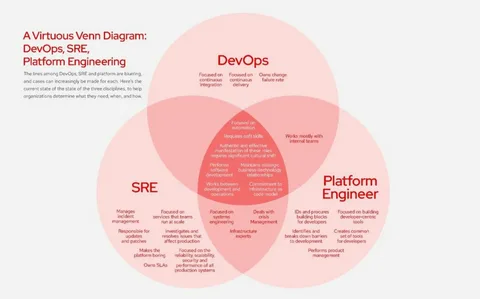
DevOps and SRE aren’t rivals—they intersect like two lanes merging into a single highway. DevOps provides the cultural foundation for collaboration and speed, while SRE brings the engineering discipline to maintain reliability.
For example, both rely heavily on automation. DevOps uses it to streamline deployments, while SRE uses it to reduce toil and improve stability. Both encourage shared ownership of systems, though SRE measures success more explicitly through reliability metrics.
Together, they balance innovation with resilience. Without DevOps, releases would stagnate. Without SRE, systems would crumble under pressure.
The Organisational Impact
Adopting both DevOps and SRE changes how teams work. DevOps fosters cross-functional alignment, while SRE formalises operational excellence. Companies that embrace both often see faster feature releases alongside reduced downtime—a balance once thought impossible.
The challenge lies in integration. It’s easy to implement DevOps pipelines or hire SREs, but it’s harder to align their goals. Successful organisations treat them as complementary roles, ensuring speed never undermines stability.
Educational pathways, such as comprehensive DevOps certification tracks, are increasingly incorporating SRE principles, demonstrating to learners how reliability practices and cultural change converge in real-world environments.
Conclusion
DevOps and SRE represent two sides of the same coin. DevOps breaks down barriers to speed up delivery, while SRE codifies reliability to ensure systems remain stable under pressure.
Like a train station that needs both punctual conductors and diligent safety inspectors, modern organisations thrive when DevOps and SRE work together. The intersection of these approaches offers the best of both worlds: rapid innovation without sacrificing trust.