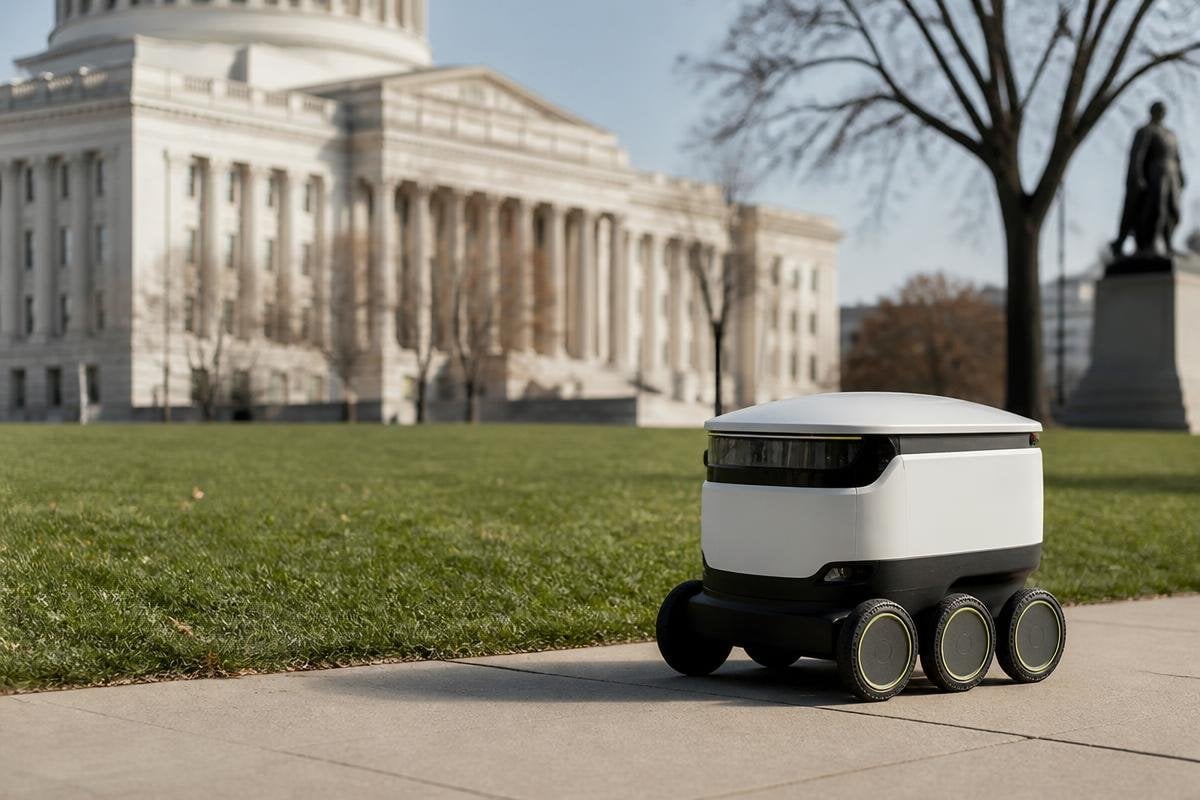
A robot can change the physical world before a public agency has time to review what went wrong. Governments should set basic rules before robots move through homes, roads, hospitals, farms, and workplaces in large numbers.
Quick read
- Require safety checks before public use
- Keep a clear human override for high-risk tasks
- Make makers report serious failures and repair unsafe systems
Why rules should come first
Robots act through motors, wheels, arms, blades, tools, and other moving parts. A faulty software update, weak sensor, or poor map can turn a small error into a physical incident.
That makes robot policy different from rules for ordinary software. A failed app may lose data or stop working. A failed robot can hit a person, damage property, block an exit, or make a decision that affects someone who never agreed to the test.
Rules also give makers a clear target before they spend money on large deployments. If each city, agency, or workplace sets a different safety process, companies face a patchwork of demands and public officials face gaps between them.
Early rules don’t need to cover every design choice. They need to set a floor for testing, records, human control, and responsibility when a robot causes harm.
What early rules should cover
Safety comes first. A robot that works near people should pass tests for stopping, speed limits, obstacle detection, and recovery after a sensor failure. The exact test should match the machine and its setting. A warehouse cart and a surgical robot don’t create the same risks.
Human control also needs a clear place in the design. A supervisor should know when the robot has lost confidence, how to stop it, and what the machine will do after a stop command. For high-risk work, a remote stop should remain available when local access is blocked.
Records matter after an incident. Makers and operators should keep logs that show the robot’s software version, sensor warnings, commands, and stop events. Those records can help an inspector find the fault instead of relying on a damaged machine and several competing accounts.
Responsibility should be written down before deployment. The maker may control the hardware, an operator may set the task, and a site owner may control the space. A rule should state which party handles training, maintenance, reports, and compensation.
Rules should match the risk
A single rule for every robot would miss the point. A small educational arm behind a locked lab barrier needs a different process from an autonomous delivery vehicle sharing space with pedestrians.
A useful system can sort robots by what they can affect. Low-risk machines may need basic product and electrical checks. Machines that work near people may need independent testing, operator training, and event records.
Systems that make decisions about access, care, or public safety need stronger review and a named person who can stop their use.
A software update or a new work setting can change a robot’s risk, so a rule written once will age quickly. Ongoing robotics reporting on real deployments gives policy teams dated examples to compare with company claims before they set a rule.
The rule should follow the task, not the label on the product. Calling a machine an assistant, platform, or autonomous system doesn’t tell you what can happen when it fails.
A practical test for each robot
Before a public body approves a robot, its review should answer these points:
- Name the task: State what the robot may do and where it may operate.
- Map the failure: List the likely faults and the harm each one could cause.
- Check human control: Test the stop command, warning system, and handoff to a person.
- Set the records: Keep software versions, maintenance work, warnings, and incident logs.
- Assign the duty: Name the maker, operator, and site owner responsible for each part.
- Set the review date: Recheck the approval after major software, hardware, or task changes.
These checks give governments a way to act without freezing useful work. They also give companies a clear path to prove that a robot is ready for its setting.
I think governments should regulate robots before deployment spreads, but the rules should focus on physical risk, human control, and clear responsibility rather than on labels or broad promises. The first question for every approval should be simple: who can stop this machine, and what happens when it fails?